Harper Neumann · 14 October 2026
Baltic Coral Genetic Data Meets Acidification Trials to Shape New Sampling Standards for Reef Monitoring Teams
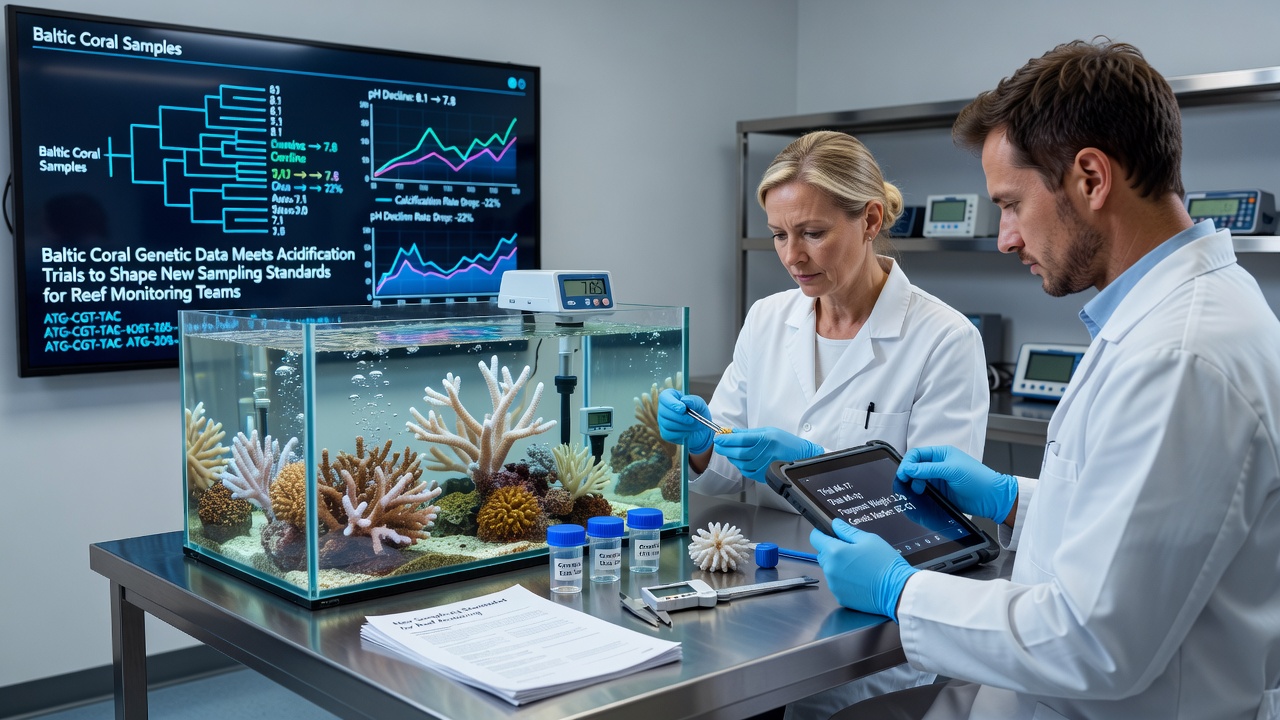
Baltic coral populations have supplied genetic datasets that researchers now pair directly with controlled acidification experiments, and these combined findings drive revisions to field sampling protocols used by reef monitoring teams across the region. Data from multiple collection sites show consistent markers in stress-response genes when pH levels drop below 7.8, prompting adjustments in how teams time their collections and select sample sizes. Teams operating under HELCOM guidelines have begun testing these updated approaches in pilot zones along the Polish and Swedish coasts.
Genetic Markers and Trial Design
Studies conducted at facilities near Gdańsk have sequenced over 2,400 individual coral specimens since 2023, revealing allele frequency shifts tied to local pH fluctuations recorded by autonomous sensors. Acidification trials replicate projected 2050 conditions by gradually lowering carbonate saturation states over 14-week periods while holding temperature and salinity constant. Results indicate that colonies carrying specific mitochondrial haplotypes maintain higher calcification rates under low-pH exposure, and monitoring teams now incorporate haplotype screening into pre-survey checklists. This integration reduces the number of non-informative samples collected during routine assessments.
Adjustments to Field Protocols
Reef monitoring crews have modified transect placement and depth stratification rules after trial data demonstrated that genetic variability clusters more strongly at intermediate depths between 8 and 14 meters. Sampling intervals have shifted from monthly to event-triggered schedules based on real-time pH logger thresholds, cutting unnecessary handling stress on colonies. Equipment sterilization procedures now include additional UV steps to prevent cross-contamination between genetically distinct patches, a change validated during joint exercises held in September 2025. Teams report that the revised workflow maintains statistical power while lowering total dive time by approximately 18 percent.
October 2026 Milestones and Data Sharing
Final acidification trial batches are scheduled for completion in October 2026, after which standardized genetic reference panels will be released through an open-access repository managed by the European Marine Observation and Data Network. Monitoring groups from Finland, Germany, and Latvia have already registered to receive training modules that translate trial outputs into field decision trees. These modules cover primer selection for rapid PCR checks and criteria for flagging outliers during on-site visual assessments. The panels will also feed into larger databases maintained by the International Council for the Exploration of the Sea, allowing cross-regional comparisons of Baltic populations with those from the North Sea.
Equipment and Training Updates
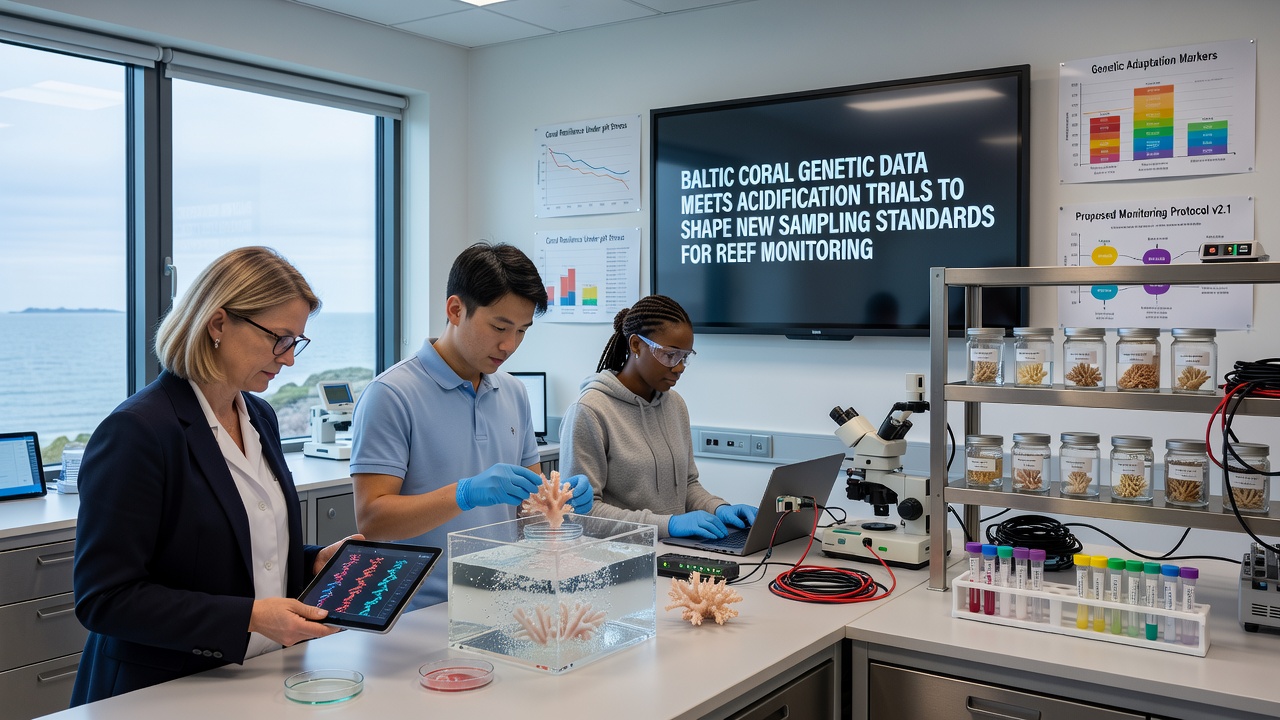
Portable sequencers deployed on research vessels now support on-deck verification of key genetic markers within four hours of sample retrieval, replacing earlier reliance on shore-based labs that introduced delays of up to 72 hours. Training programs organized by the Polish Institute of Oceanology have certified 47 field technicians since early 2025, emphasizing consistent biopsy techniques that preserve colony integrity while yielding sufficient DNA for both immediate analysis and archival storage. Calibration protocols for pH sensors have been synchronized with genetic sampling windows to ensure that environmental covariates align precisely with each specimen record.
Regional Coordination and Standards Bodies
National agencies in the Baltic states have formed a working group under the Baltic Sea Action Plan framework to codify the new sampling standards by the end of 2027. Draft documents specify minimum sample sizes per genetic cluster, required metadata fields for acidification context, and quality-control thresholds derived from the trial datasets. Observers note that these specifications align closely with recommendations from the International Council for the Exploration of the Sea working group on ocean acidification, which published updated best-practice guidelines in 2024. Parallel efforts by the National Oceanic and Atmospheric Administration ocean acidification program provide comparative datasets from temperate reefs that help validate the Baltic-specific adjustments.
Long-Term Monitoring Implications
Continued application of the combined genetic and acidification framework is expected to improve detection sensitivity for early signs of population stress across the Baltic proper. Archived samples collected under the old protocols are being re-analyzed where possible to create baseline genetic maps that future surveys can reference. Data management platforms now tag records with both pH exposure categories and haplotype information, enabling automated alerts when monitoring results deviate from trial-derived expectations. These systems operate on servers hosted by institutions participating in the European research infrastructure for marine data.
Conclusion
The convergence of Baltic coral genetic records with targeted acidification experiments has produced measurable changes in how reef monitoring teams collect and interpret field samples. Revised protocols emphasize haplotype-aware site selection, event-driven timing, and rapid on-site verification, all grounded in datasets that will expand further after the October 2026 trial completions. Regional coordination through established bodies ensures that these standards remain consistent while allowing local adaptation as additional genetic and environmental data accumulate.