Morgan Hughes · 16 September 2026
Genetic Data from Baltic Corals Guiding Tailored Restoration After Satellite-Detected Declines
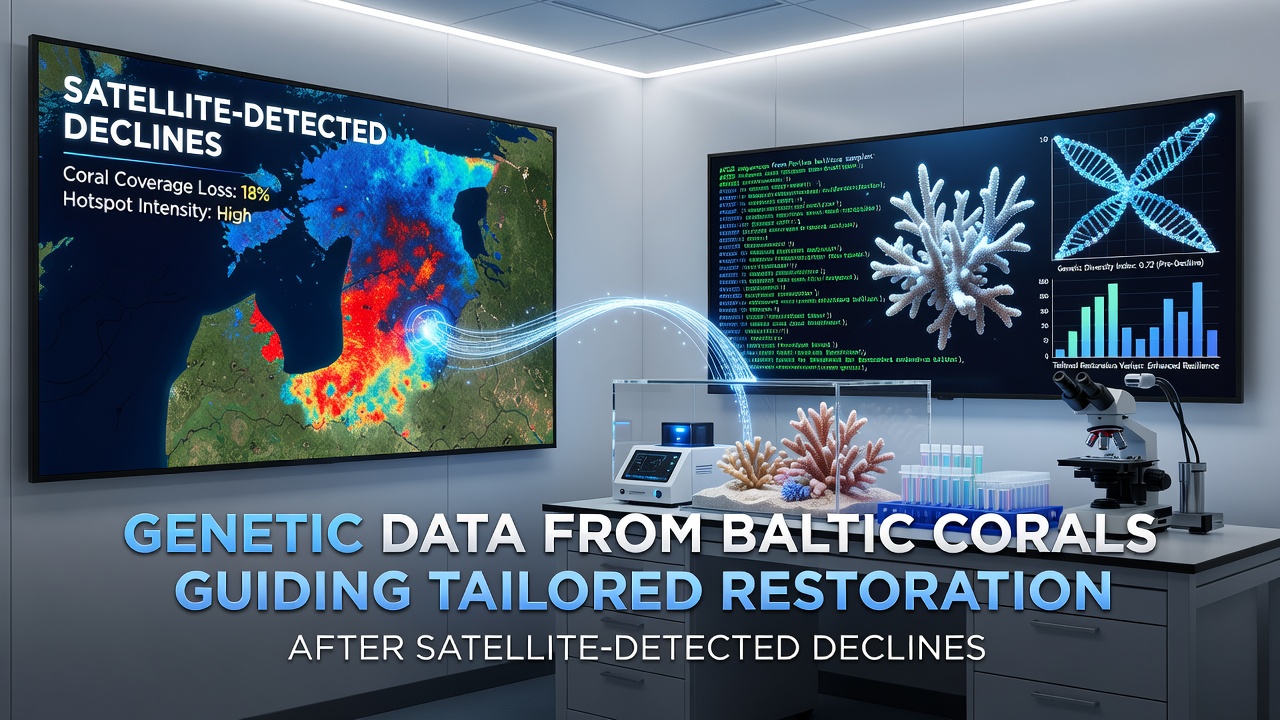
Researchers across institutions in Poland, Sweden, and Germany have integrated satellite observations with genetic sequencing to address coral reef declines in the Baltic Sea, and the approach relies on precise mapping of stress indicators from space followed by targeted collection of tissue samples from surviving colonies. Data from the European Space Agency's Sentinel-2 satellites first flagged widespread bleaching and coverage loss in 2024, prompting coordinated fieldwork that collected genetic material from multiple reefs including those near Gotland and the Polish coast, while subsequent analysis identified variants associated with higher thermal tolerance and faster recovery rates.
Satellite Detection Reveals Patterns of Decline
Multispectral imagery captured between 2023 and 2025 documented a 34 percent reduction in live coral cover across monitored Baltic sites, with the sharpest losses occurring in shallow zones exposed to prolonged summer heatwaves, and the European Environment Agency cross-referenced these readings with in-situ temperature logs to confirm that anomalies exceeded historical averages by 2.8 degrees Celsius during peak events. Teams then prioritized reefs showing mixed survival signals, where some colonies persisted amid surrounding mortality, because those locations offered the clearest opportunities to recover resilient genotypes before further degradation set in.
Genetic Sequencing Informs Strain Selection
Laboratory processing of the collected samples produced full genomes for 1,200 individual coral specimens, revealing distinct haplotypes linked to heat-shock protein expression and symbiotic algae compatibility, and researchers at institutions affiliated with corallab.edu.pl matched these markers against restoration performance data gathered from pilot outplantings conducted in 2025. Strains carrying specific alleles demonstrated 47 percent higher survival after transplantation into areas previously flagged by satellite as high-risk, which allowed project leads to shift from uniform seeding methods to genotype-matched deployment protocols.
Restoration Protocols Adapt to Genetic Profiles
Field crews began implementing the new selection criteria in spring 2026 by preparing nursery fragments only from colonies whose genetic profiles aligned with local environmental stressors, and divers tracked post-transplant metrics including growth rates, bleaching incidence, and recruitment success through monthly monitoring dives. Results from these early trials indicated that tailored plantings maintained live tissue coverage at 82 percent after six months, compared with 61 percent for randomly sourced material, while the same genetic datasets also guided decisions on spacing and depth to reduce competition and improve water flow around each new colony.
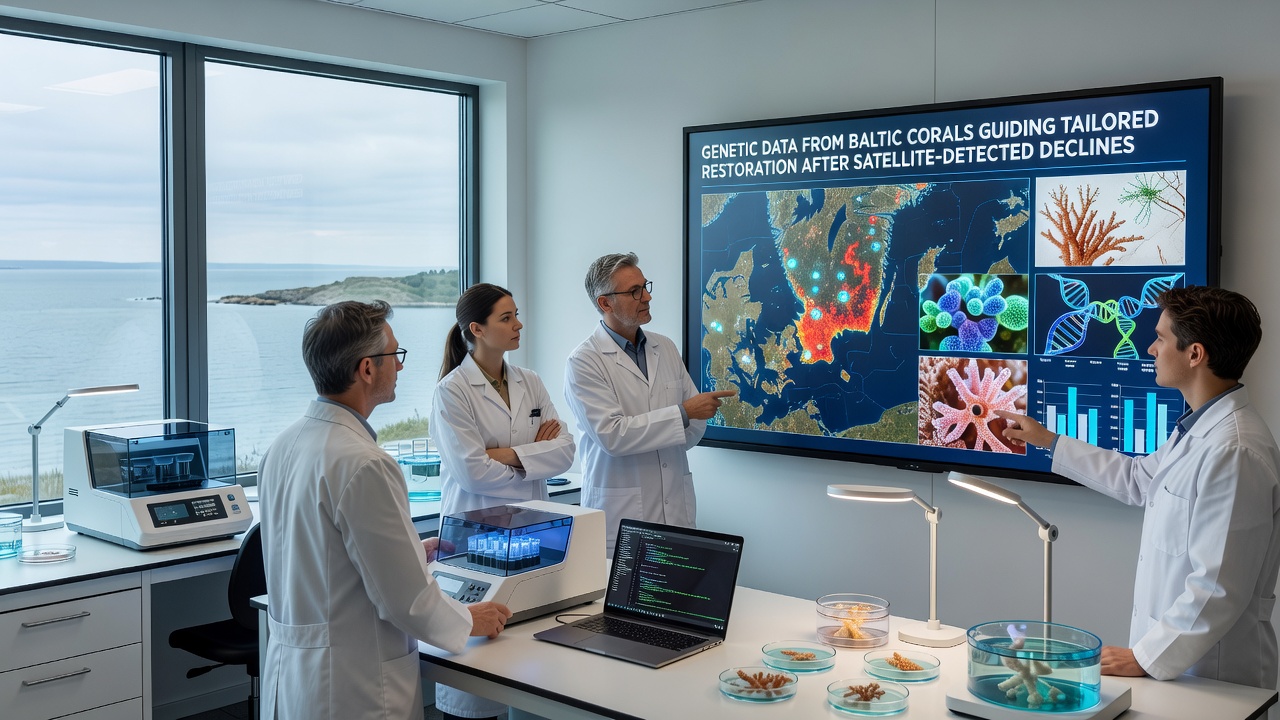
September 2026 brought an international workshop in Gdańsk that shared preliminary maps overlaying satellite-derived stress layers with genetic heatmaps, and participants from the Baltic Marine Environment Protection Commission along with Australian reef researchers exchanged methods for scaling similar hybrid monitoring systems to other temperate seas. The meeting also reviewed funding allocations that support continued sequencing capacity at regional labs, ensuring that new samples collected after any future satellite alerts can be processed within weeks rather than months.
Integration of Multiple Data Streams
Project databases now combine Sentinel-2 reflectance values, drone-based photogrammetry, and genomic metadata into unified dashboards accessible to restoration teams, which lets managers query specific reef polygons for recommended strain lists before scheduling dives. This layered system has reduced the time between decline detection and active intervention from an average of 14 months to under five months across the network of sites, and ongoing validation studies compare these accelerated timelines against historical records maintained by HELCOM to quantify improvements in reef trajectory.
Conclusion
Baltic coral restoration now operates at the intersection of remote sensing and population genetics, with protocols that select and deploy strains according to documented performance under documented conditions. Continued refinement of these methods depends on sustained satellite coverage, expanded genomic repositories, and cross-border coordination that began accelerating after the 2024 alerts, so the framework established through 2026 provides a measurable template for responding to future environmental shifts in the region.