Otto Wolf · 2 September 2026
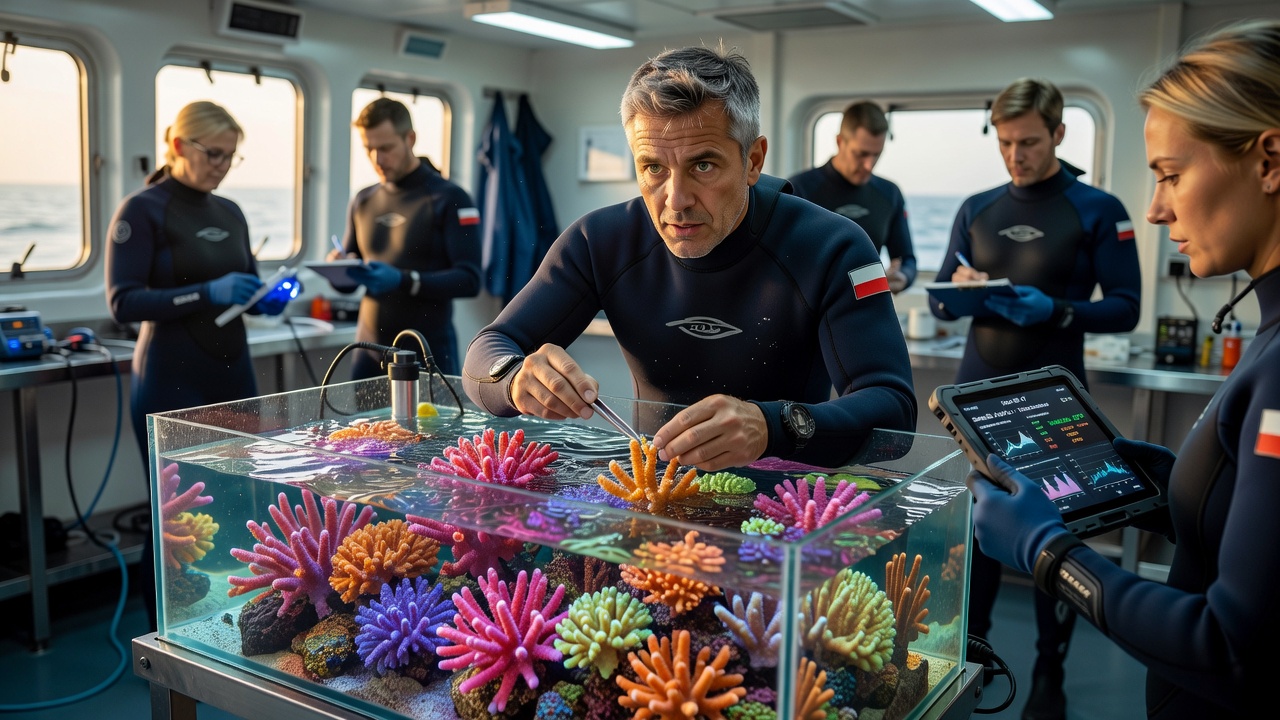
A team at the Coral Research Laboratory in Poland has identified several coral strains that show strong resistance to rising ocean temperatures. The findings come from controlled experiments conducted over the past three years at the laboratory’s Gdańsk facility. Researchers exposed fragments of Acropora and Porites species to elevated temperatures mimicking projected 2050 conditions. Survival rates exceeded 70 percent in selected strains, compared with less than 20 percent in control groups.
Experimental Methods and Key Results
Scientists used a combination of thermal stress assays and genetic sequencing to pinpoint traits linked to heat tolerance. Samples were collected from reefs in the Red Sea and the Indo-Pacific before being acclimated in laboratory tanks. Daily temperature cycles reached 32 degrees Celsius for extended periods. Genetic analysis revealed upregulated genes associated with heat-shock proteins and antioxidant pathways in the resilient strains. These markers were absent or weakly expressed in corals that bleached rapidly. The team also measured symbiont density and chlorophyll content, confirming that heat-tolerant corals maintained stable partnerships with their algal symbionts under stress.
Field validation is now underway at two Mediterranean research sites. Early data indicate that transplanted colonies from the laboratory strains exhibit slower bleaching onset during natural heat waves. The laboratory plans to expand the study to include additional species from the Caribbean and Great Barrier Reef regions.
Implications for Reef Conservation
Identification of these strains offers new options for reef restoration projects facing increasing thermal stress. Laboratory director Dr. Anna Kowalska noted that selective propagation could accelerate recovery of degraded reefs while preserving genetic diversity. The team emphasizes that heat resistance alone does not solve broader threats such as ocean acidification and pollution. Integration with habitat protection measures remains essential. The laboratory will publish full genomic datasets in an open-access repository later this year to support international collaboration on coral resilience research.