Harper Neumann · 28 October 2026
Satellite Data and Student Training Programs Reveal Connections Between Tissue Damage Patterns and Post-Event Recovery in Coastal Reefs
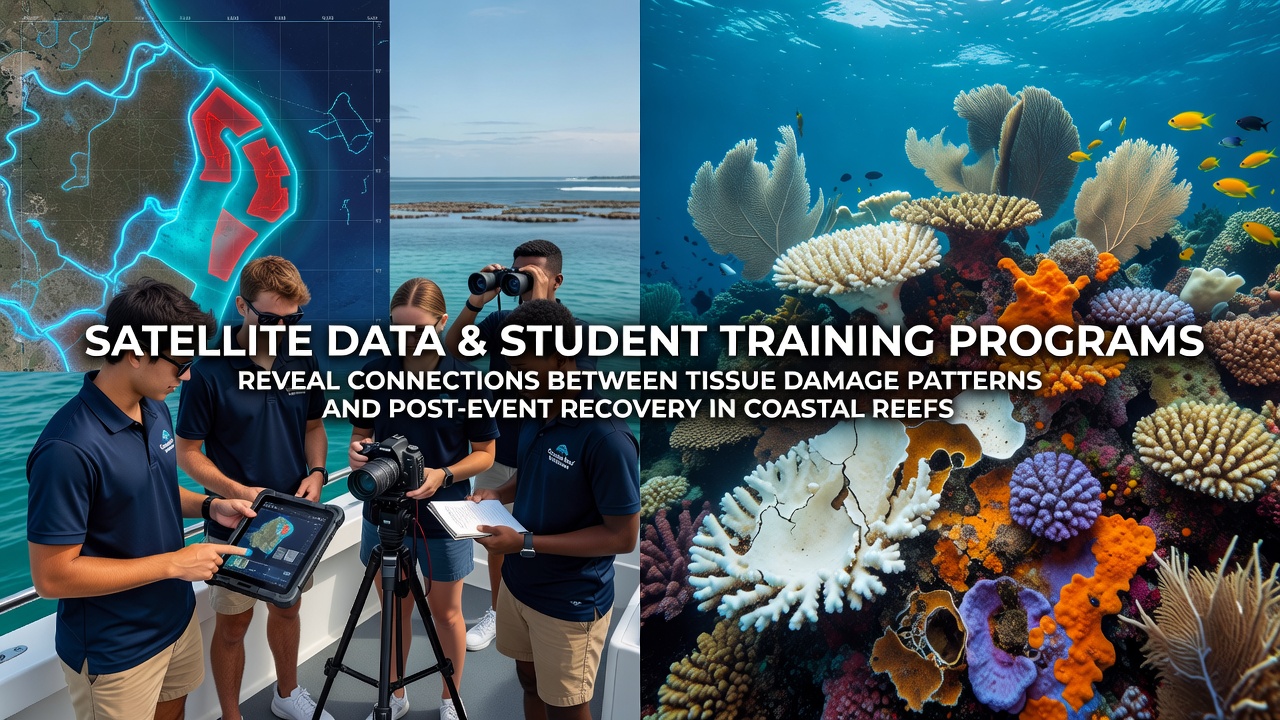
Coastal reef systems worldwide have drawn increased attention from monitoring teams that combine satellite observations with hands-on student programs, and these efforts have begun to map specific tissue damage patterns onto measurable recovery timelines after storms, heat events, and other disturbances. Researchers at institutions in multiple regions have integrated high-resolution multispectral data from orbiting platforms with field measurements collected during structured training sessions, creating datasets that link visible tissue loss zones to subsequent regrowth rates in species such as Acropora and Porites.
Satellite Platforms and Damage Detection Methods
Agencies including the National Oceanic and Atmospheric Administration operate sensors that capture reflectance changes across reef flats at scales of ten meters or finer, allowing teams to flag areas where chlorophyll degradation signals tissue damage within days of an event. Data collected after the 2024 Atlantic hurricane season showed distinct radial patterns of paling that corresponded to physical abrasion zones near reef crests, while deeper lagoon areas retained higher live cover percentages according to the same imagery. Analysts cross-reference these signals with bathymetric models to correct for water-column interference, producing maps that training cohorts then use to prioritize ground-truth surveys.
Student Training Structures and Field Integration
University programs in Australia and the United States have embedded satellite analysis modules into summer field courses where participants learn to process open-access imagery before traveling to reef sites for targeted sampling. During the 2025 season, cohorts working along the Great Barrier Reef applied algorithms to identify damage clusters and then conducted histological assessments on collected fragments, confirming that central zones of tissue loss recovered more slowly than peripheral margins over six-month intervals. These exercises generate standardized protocols that link pixel-level metrics directly to colony-level healing observations, reducing variability across different observer groups.
Patterns Linking Damage Morphology to Recovery Outcomes
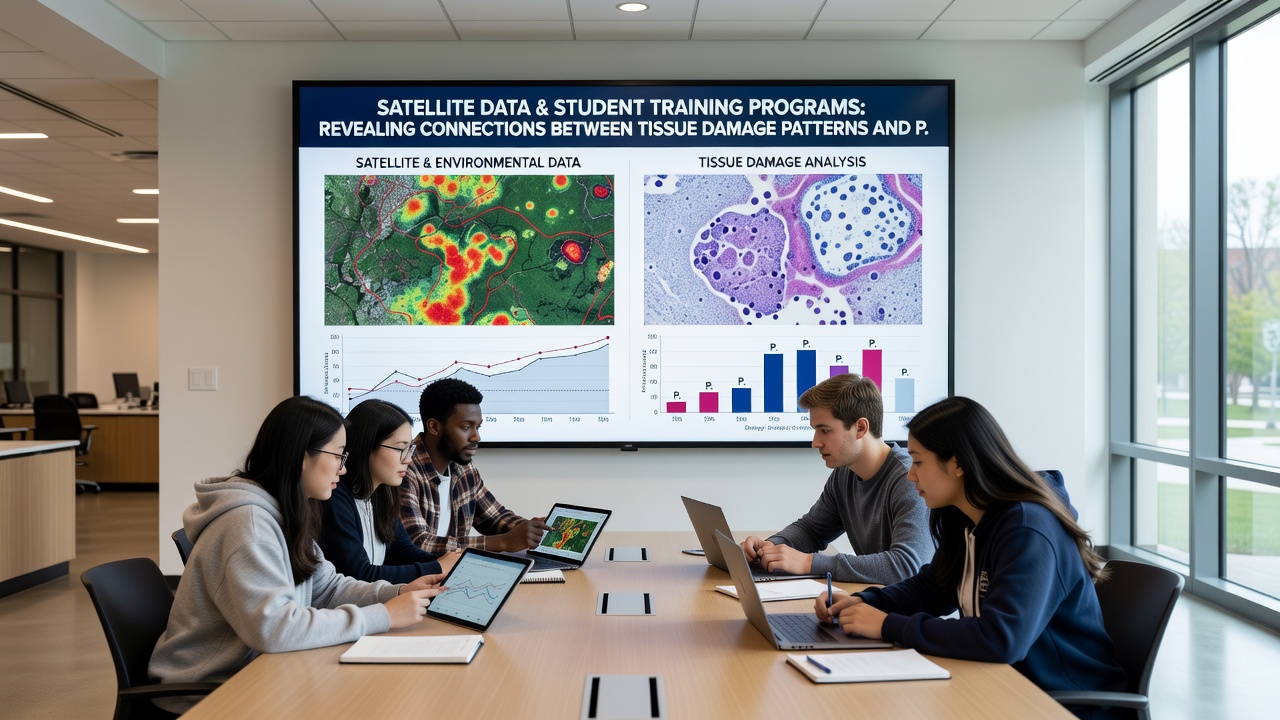
Analysis of multiple events has shown that linear damage tracks aligned with wave direction tend to exhibit faster partial recovery when adjacent live tissue remains intact, whereas patchy necrotic zones surrounded by sediment often display prolonged exposure of skeleton before new growth initiates. In October 2026, updated time-series products from the European Space Agency are scheduled for release and will extend these comparisons across additional Indo-Pacific sites, allowing researchers to test whether the same morphological categories predict similar timelines under varying turbidity regimes. Student-collected data have already contributed to peer-reviewed repositories that document how initial damage extent above 40 percent surface area correlates with recovery delays exceeding twelve months in monitored Caribbean locations.
Regional Comparisons and Data Sharing
Teams operating in the Florida Keys have shared protocols with counterparts in Western Australia through joint workshops, adapting the same satellite-to-field workflow to local species assemblages and tidal ranges. Reports from these collaborations indicate that recovery trajectories remain consistent when damage morphology is classified by shape and depth rather than by geographic location alone. Public datasets hosted by academic networks now include training modules that walk new participants through the full pipeline, from downloading Level-2 satellite products to entering standardized recovery scores in shared spreadsheets.
Conclusion
Continued expansion of these combined approaches supplies reef managers with repeatable indicators that forecast recovery windows based on early damage signatures, and the integration of student programs ensures both data volume and methodological consistency grow across seasons. As additional satellite missions come online and training curricula incorporate refined classification schemes, the connections between observed tissue patterns and post-event trajectories stand to inform targeted interventions at sites where natural recovery proceeds more slowly.